Fables and folktales of the world, told with care

Real stories with a beginning, a middle and an end. A little moral, music, a dance and a few surprises. Made by a family, for families.

Our stories

Each fable comes from a different corner of the world, told in a colourful block-built world that children already love.

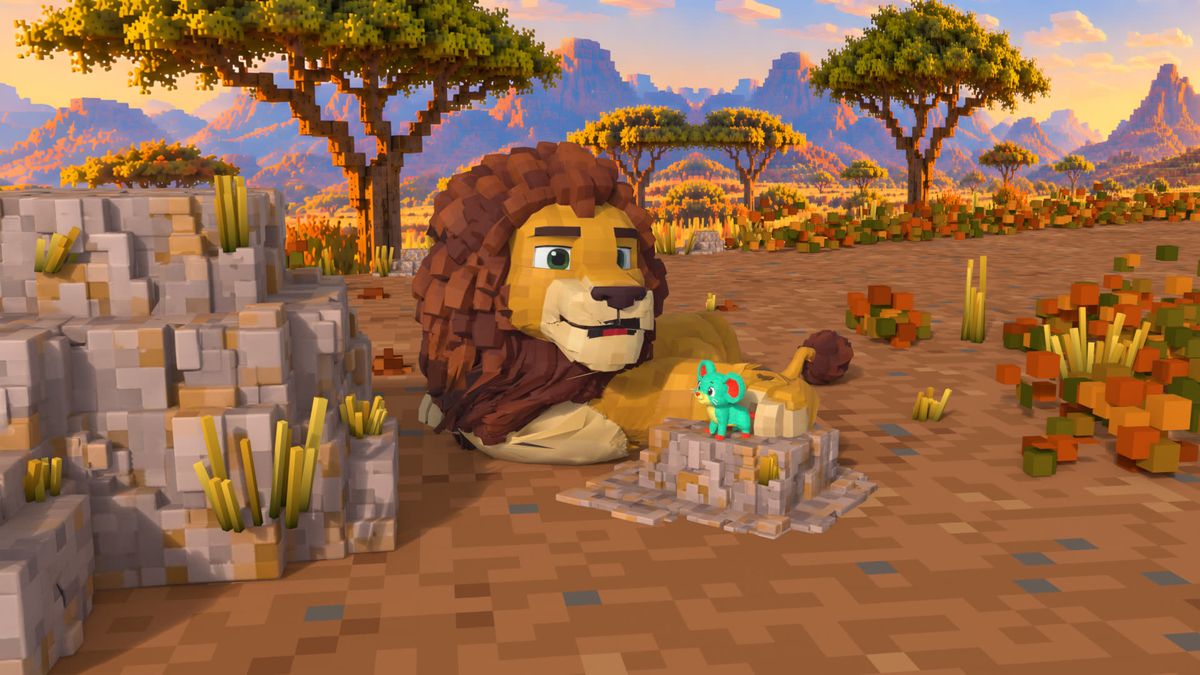
A big friendly voxel lion lies in the savannah while a small turquoise mouse stands on a rock in front of him

The Lion and the Mouse

A fable from Ancient GreeceAbout 6 minutesAges 3 to 9

A mighty lion laughs at a tiny mouse's promise. One night he is caught in a poachers' net, and the biggest animals of the savannah cannot free him. Then the mouse arrives.

Now being tested with families. The public release follows soon.

It started at home

I am a mother of two, living in Australia. Like many parents, I watched my children disappear into an endless stream of videos: bright colours, loud voices, people chattering over games, one clip rolling into the next. Hours went by, and there was no story in any of it. Nothing began, nothing mattered, nothing ended. There is a word for this kind of content, made fast and cheap to keep children watching rather than to give them anything: slop.

I could have just switched it off, and sometimes I do. But I wanted my children to understand why. I wanted them to feel the difference between something made to grab their attention and something made with care for them. The best way I could think of to show them that difference was to make something myself, and to make it with them.

What Edufables is

Edufables tells the world's oldest fables and folktales, the stories that parents and grandparents have told children for hundreds and sometimes thousands of years. These stories have survived because they work. They are short, funny, surprising, and each carries a small truth worth talking about afterwards.

We tell them in a colourful, block-built world, because that is a world children already love. But the stories come first. Every episode has a real beginning, middle and end, a moral shown at the close, and one question for the child to think about.

What we promise

  • A whole story, every time.No cliffhangers to keep you clicking, no padding to make an episode longer.
  • We stop when the story ends.Most episodes run five to six minutes, with a short dance at the end for anyone who stays.
  • Care in every detail.Voices, music, sound and pictures are chosen, checked and fixed by hand. Our closing music is Bizet's Seguidilla, arranged so the last note falls exactly as the book closes.
  • Many languages, done properly.Each fable is made separately in each language, so the characters' mouths move with their own words. English, Indonesian and Japanese come first, with more on the way.
  • Something parents need not be ashamed of.Not a replacement for reading a book aloud, but a good companion to it.

Who makes it

Edufables is a small family project, not a studio. I write and direct. My daughter is the voice of our turquoise mouse, who is becoming the host of the series. My youngest son, who until now mostly watched, has started asking how the videos are made and wants to help. That alone made the work worthwhile.

Many minds, one story

Each episode is a real collaboration. The Lion and the Mouse grew from my ideas, my children's ideas and ideas from our AI assistant, argued over, tried out, and kept only if they made the story better. My children suggested many of the moments that make it fun. They are also our first and toughest critics: if they get bored, we change it.

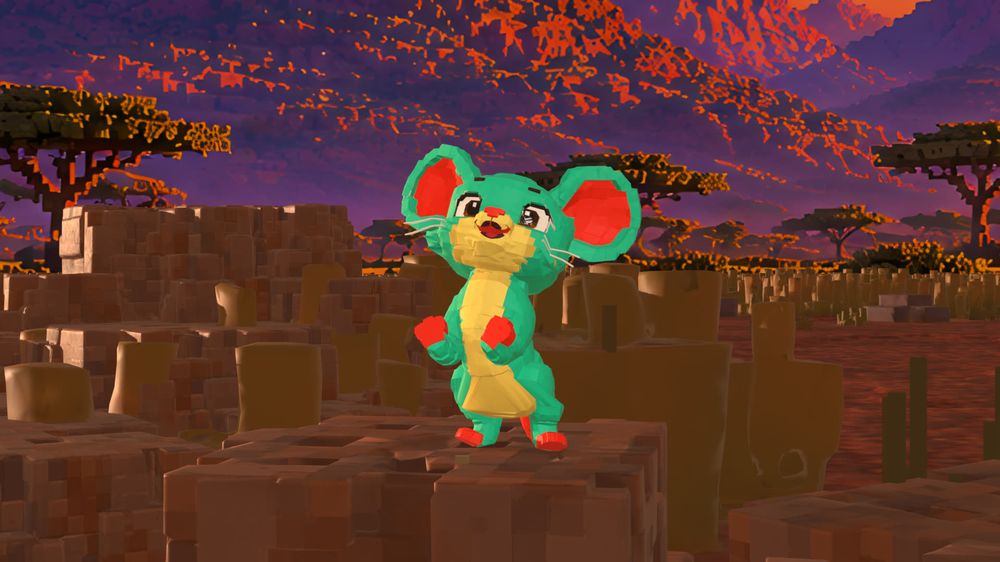
The turquoise mouse standing on a rock at dusk, ready to help
Our host, the turquoise mouse, voiced by a real girl.

The same tools, a different job: AI and slop

We use AI, and we think it is right to say so. Some voices, especially in other languages, are made with AI voice tools. Some backgrounds and 3D models start from AI-generated images, and an AI assistant works with us on scripts, ideas and the technical side.

People call it "AI slop", but that name lets the wrong party off the hook. The slop does not belong to AI. It is made by people who do not care what children learn or who they become. They take the shortest, loudest, most twitchy ingredients that hold a child's eye, and use AI as a printing press to churn out video after video. It is a return-on-investment machine: put as little in as possible, take as much out as possible. The platforms that pay for minutes watched share in that profit, so nobody in the chain has a reason to stop.

The ones who pay are the children. A steady diet of quick rewards trains short attention, little patience and few ideas of their own, and that is the habit a generation carries into adult life. AI did not choose this. People chose to use it this way, just as some people choose to misuse every powerful tool. The tool can just as well be used the other way: to help a small family team make something rich and careful that a single family could never make alone.

So what makes us different from the channels that churn out hundreds of AI cartoons? Not the tools. Much of today's slop is made with the same tools. The difference is what the tools are for, and who is in charge.

ComparedSlopEdufables

In short: in slop, AI replaces the people. At Edufables, AI multiplies what a small family can do, while the people stay in charge of every decision that reaches a child.

20,000

new stories a month, if only one family in a hundred thousand around the world made one careful story for other families.

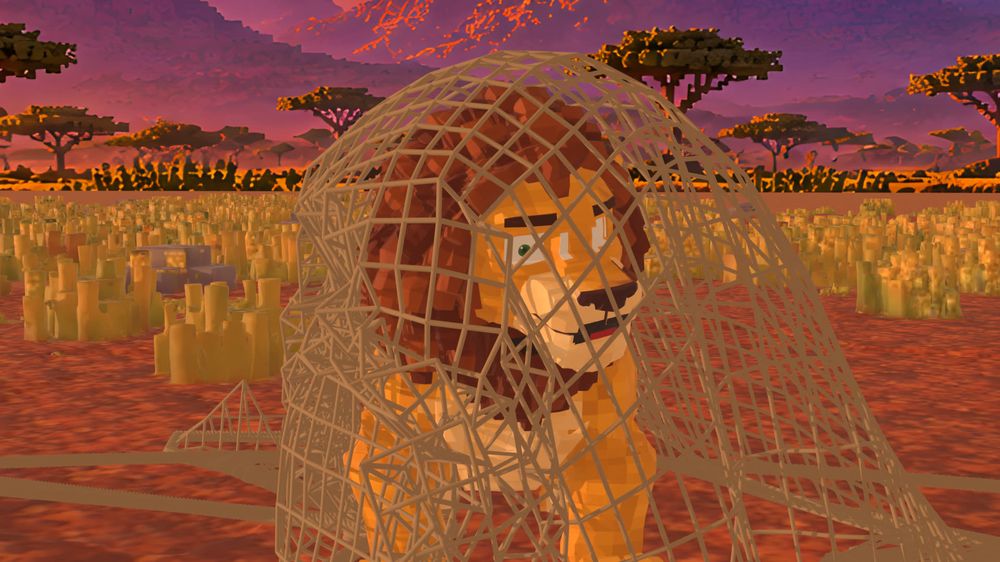
The lion caught under a poachers' net at dusk in the savannah
A moment from The Lion and the Mouse.

Families making stories for families

The same tools that flood children's screens with slop can also hand storytelling back to families. Making a good animated story no longer needs a studio. It needs care, time, a modest computer, open source software and a few hundred dollars of AI subscription. The time is the real cost.

Think of what that could mean: stories from every culture, told by the people who grew up with them.

Let us be honest about the money. Careful stories earn modest returns, nothing like the profits of the slop factories, and weeks of work for small returns makes little sense as a business. It makes perfect sense as a gift. The people best placed to give it are those with time and a lifetime of stories: retired grandparents. A grandparent who spends a few weeks turning a family story, or a fable from their own childhood, into a film for their grandchildren is not running a venture. They are leaving something behind that the grandchildren can watch, and one day show their own children, to remind them where they came from. Other families can enjoy it too. Whatever it earns is a bonus that helps cover the costs.

Edufables is our attempt to show that it can be done. If it inspires your family to try, tell us. We would love to watch what you make.
Tell us what you think

We test every episode with real children before it goes public, and we would love to hear from you too: what your children enjoyed, where they lost interest, and which story from your own culture you would like to see next.

Isabella, creator of Edufables